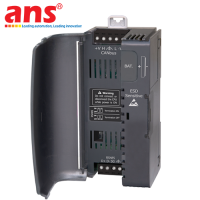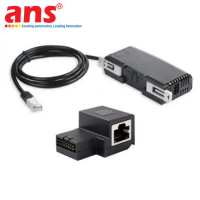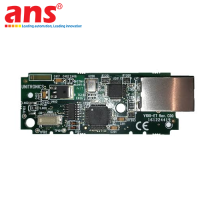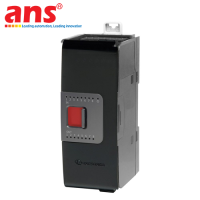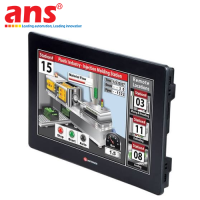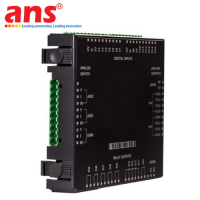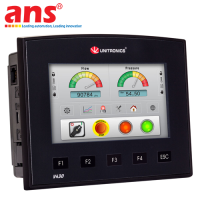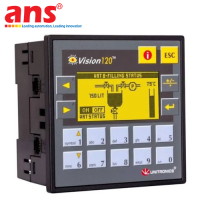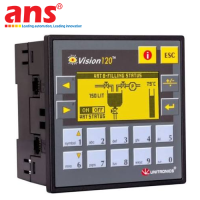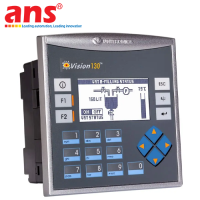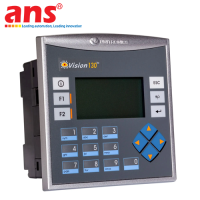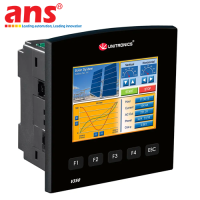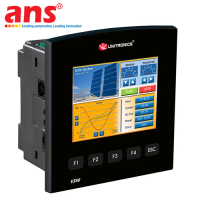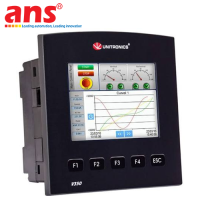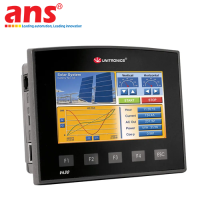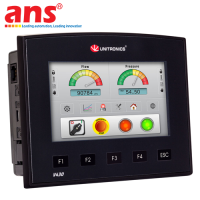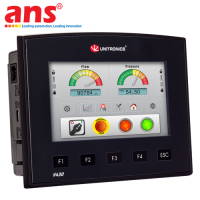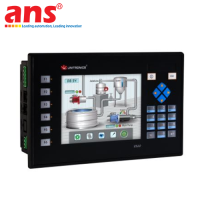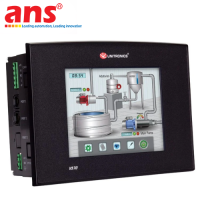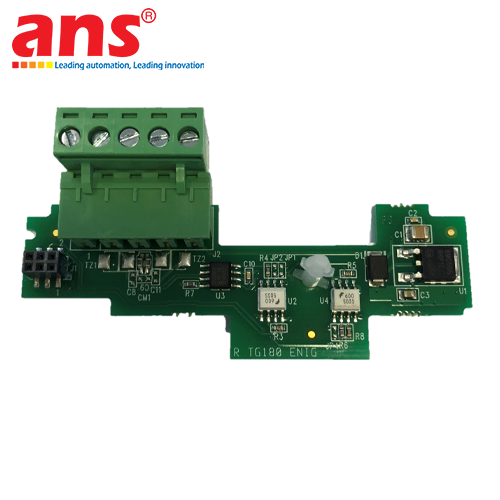
Unitronics V100-17-CAN Isolated CANbus Interface Module (for Vision V130, V350, V430, V700)
Price: Contact
Brand: Unitronics Vietnam
Category: Module
Supplier: AnhNghiSon
Origin: isreal


 0911472255
The Unitronics Model V100-17-CAN Isolated CANbus Communication Interface Module, engineered and manufactured by Unitronics Ltd. in Airport City, Israel, is a plug-in communication expansion board designed specifically for the Unitronics Vision Series of All-in-One Programmable Logic Controllers (OPLC™), including Vision130™, Vision350™, Vision430™, and Vision700™.
Seamless Embedded Hardware Expansion Architecture:
Standard Unitronics Vision controllers ship with built-in serial or USB programming ports. To incorporate the controller into high-speed distributed networks or integrate intelligent motion peripherals, the V100-17-CAN module docks directly into a dedicated header inside the OPLC’s rear chassis:
- Zero Additional Enclosure Footprint: Installs completely inside the existing controller body, maintaining the unit's slim depth without occupying extra DIN-rail real estate.
- Pluggable 5-Pin Industrial Terminal: Terminates externally into a robust 5-position pluggable screw connector (V-, CAN_L, Shield, CAN_H, V+), allowing fast wiring, straightforward cable daisy-chaining, and simple field servicing.
Multi-Protocol Industrial Fieldbus Support:
- Unitronics Proprietary UniCAN Protocol: Enables high-speed, peer-to-peer communication among up to 60 Unitronics OPLC units. Controllers autonomously share register data, coil bits, and structured data tables without requiring a master supervisory PLC.
- Open CANopen Standard (Master / Slave): Communicates natively with industrial CANopen devices, including variable frequency drives, brushless servo systems, proportional valve terminals, and remote fieldbus I/O drops conforming to CiA standards.
- Commercial Engine SAE J1939 Protocol: Reads real-time operational parameters such as oil pressure, coolant temperature, RPM, fuel consumption rate, and Diagnostic Trouble Codes (DTCs) from the electronic control units (ECUs) of stationary diesel engines and mobile machinery.
- Generic CAN Layer 2: Supports custom 11-bit and 29-bit CAN message frames for proprietary field instrumentation.
Key Engineering Features & Operational Advantages:
- 500 VDC Galvanic Optical Isolation: Electrically isolates the external CANbus communication lines from the OPLC’s internal digital logic and DC power supply, rated to withstand 500 VDC for 1 minute. This eliminates ground potential loops and shields sensitive electronics from heavy motor-switching transients.
- Flexible Baud Rate Scaling (10 kbps to 1 Mbps): Provides software-configurable network speeds ranging from 1 Mbps for high-speed localized machine control (up to 25 meters) down to 10 kbps for extended plant-wide telemetry runs (up to 1,000 meters).
- Unified Software Configuration in VisiLogic™: All port parameters, Node ID addresses, baud rate settings, and UniCAN/CANopen Function Blocks are configured directly within Unitronics’ license-free VisiLogic™ programming environment.
Target Industrial Sectors & Applications:
- Automated Packaging & Labeling Lines: High-speed synchronization of servo film feeds, rotary label applicators, and cutoff knives over CANopen.
- Industrial Generator Sets & Engine Power Skids: Continuous J1939 monitoring of diesel engine ECU parameters on marine power systems, data center standby generators, and fire pump engines.
- Municipal Water & Wastewater Treatment: UniCAN telemetry networking across multiple booster pump panels and remote chlorination dosing stations.
- Factory Automation & Motion Platforms: Integrating distributed pneumatic valve blocks and multi-axis positioning actuators on machine tools and assembly cells.
- Advanced Commercial Greenhouses: Interconnecting distributed environmental micro-controllers managing irrigation, louvers, and heating zones.
• Manufacturer: Unitronics (Unitronics Ltd.)
• Country of Origin: 100% Israel (Made in Israel)
• Product Line: Vision Series Communication Add-on Modules
• Model Designation: V100-17-CAN
• Hardware Compatibility:
- Unitronics Vision130™ OPLC Series (e.g., V130-33-R34, V130-33-T2...)
- Unitronics Vision350™ OPLC Series (e.g., V350-35-R34, V350-35-T2...)
- Unitronics Vision430™ OPLC Series
- Unitronics Vision700™ OPLC Series (V700-T20BJ)
• Installation Method: Direct internal plug-in mounting onto the OPLC motherboard communication port
• External Physical Interface: 5-pin pluggable screw terminal block (3.81 mm pitch)
• Terminal Pinout Designation:
- Pin 1 (V-): CANbus external power negative return (0 VDC)
- Pin 2 (CAN_L): CAN differential signal Low
- Pin 3 (Shield): Cable braided shield connection (Chassis ground)
- Pin 4 (CAN_H): CAN differential signal High
- Pin 5 (V+): CANbus external power supply (+24 VDC nominal)
• CANbus Network Supply Voltage: 12 to 24 VDC external supply
• Permissible Voltage Tolerance: 10.2 to 28.8 VDC
• Bus Current Consumption: Max. 40 mA @ 24 VDC, 80 mA @ 12 VDC
• Galvanic Isolation: Optically isolated, tested to 500 VDC for 1 minute (between CAN network and OPLC circuitry)
• Supported Communication Protocols:
- UniCAN (Unitronics proprietary peer-to-peer, up to 60 nodes)
- CANopen (Master / Slave CiA DS301 profile)
- SAE J1939 (Diesel/gas engine ECU telemetry)
- CAN Layer 2 (Custom 11-bit standard and 29-bit extended frames)
• Configurable Network Baud Rates: 10, 20, 50, 125, 250, 500, 800, 1000 kbps (1 Mbps)
• Maximum Transmission Distance: Up to 1,000 meters (at 10 kbps using proper shielded twisted pair cabling)
• Recommended Network Cable: Shielded twisted-pair CANbus cable with 120 Ω nominal characteristic impedance
• Bus Termination Requirements: 121 Ω 1% termination resistor required at both physical ends of the bus trunk
• Configuration Software: Unitronics VisiLogic™ (via dedicated Function Blocks)
• Environmental Ingress Rating: IP20 (enclosed within the OPLC main housing)
• Operating Ambient Temperature Range: 0°C to +50°C (+32°F to +122°F)
• Storage Temperature Range: -20°C to +60°C (-4°F to +140°F)
• Relative Humidity: 10% to 95% RH (non-condensing)
• Net Weight: Approximately 40 g (0.09 lbs)
• Regulatory Compliance: CE marked, UL & cULus certified, RoHS compliant, ISO 9001 certified manufacturing.