TAIZHOU EBPU Hot & Cold Metallographic Mounting Press
Price: Contact
Brand: TAIZHOU EBPU PRECISION INSTRUMENTS CO., LTD
Category: Thiết bị luyện kim
Supplier: AnhNghiSon
Origin: China


 0911472255
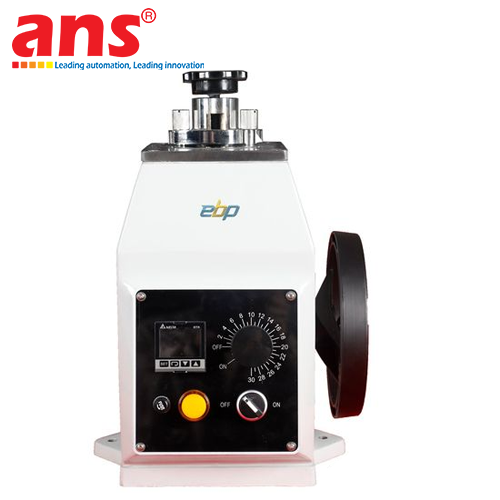
The Hot & Cold Metallographic Mounting Press, engineered, technically optimized, and manufactured by the internationally recognized brand TAIZHOU EBPU PRECISION INSTRUMENTS CO., LTD, stands as an advanced material encapsulation station. It serves a critical role in specimen containment within physical metallurgy labs, micro-structural failure analysis facilities, and premium QA/QC material cleanrooms. Within a standard metallographic sample preparation line, following the initial abrasive sectioning phase, the resulting raw specimens frequently present extremely minuscule dimensions, irregular geometric shapes, razor-sharp profiles, or delicate electroplated thin coatings. Attempting to directly grind or polish these raw elements is logistically unfeasible, leading to specimen tilting, edge rounding errors, or the catastrophic destruction of the targeted microstructure. The specialized embedding workstation from TAIZHOU EBPU resolves these operational barriers by completely surrounding the fragile workpiece within a perfectly symmetrical, cylindrical, and flat resin matrix block, providing an ideal layout for manual mechanical processing or integration into downstream automated grinding and polishing sub-systems.
The system delivers outstanding operational flexibility by comprehensively accommodating both primary specimen encapsulation philosophies utilized in material sciences: Hot Compression Mounting and an optimized workspace layout for Cold Cast Embedding. For standard hot mounting procedures, the workstation utilizes a fully automated Electro-Hydraulic drive framework governed by an intelligent digital microprocessor. The technician simply places the specimen and the appropriate mounting medium (such as thermosetting Phenolic Bakelite, Allyl compounds, or thermoplastic Acrylic powders) into the heavy-gauge mold chamber and programs the targeted temperature, pressure, and dwell vectors via an intuitive visual control panel. The system autonomously closes the mold, liquifies the polymer matrix via rapid heating, and applies continuous high-pressure hydraulic compaction to eliminate structural micro-voids or air pockets. Immediately following the load dwell matrix, the machine automatically activates its high-flow integrated Water Cooling System. This automated loop tightly controls polymer shrinkage characteristics, establishing absolute molecular adhesion between the surrounding resin boundary and the specimen interface, safeguarding delicate thin-films or protective coatings from delamination or pressure-induced cracking.
Conversely, for fragile specimens that are highly susceptible to thermal degradation or microstructural alteration under intense pressure loads—such as soft elastomers, integrated circuit board layers, biological artifacts, or low-melting-point technical alloys—the machine offers a clean, ergonomic workstation for executing cold embedding (Cold Mounting) procedures. Industrial engineers can utilize accompanying dedicated cold-mounting cups, blending two-part chemical liquid polymers (such as premium Epoxy Resin or fluid Acrylics) that solidify naturally at room temperature with zero external mechanical compression, preserving the native structural bonding of sensitive workpieces. The hot compression mold module is machined from premium high-grade alloy steels engineered to endure extreme thermal cycling and high peak pressure parameters, reinforced with industrial seals to eliminate resin powder leakage. The modular cylinder design permits quick, hot-swappable conversions across various standard mold diameters, supporting dual-sample mounting capabilities within a single automated compression cycle to double laboratory throughput. Fully integrated with automated thermal cutoff circuits, hydraulic overpressure bypass valves, and premium high-grade external thermal insulation sheets, this workstation remains an indispensable asset for precision machining industries, semiconductor cleanrooms, automotive manufacturing plants, aerospace labs, and national metallurgical research institutes.
The Hot & Cold Metallographic Mounting Press, engineered, technically optimized, and manufactured by the internationally recognized brand TAIZHOU EBPU PRECISION INSTRUMENTS CO., LTD, stands as an advanced material encapsulation station. It serves a critical role in specimen containment within physical metallurgy labs, micro-structural failure analysis facilities, and premium QA/QC material cleanrooms. Within a standard metallographic sample preparation line, following the initial abrasive sectioning phase, the resulting raw specimens frequently present extremely minuscule dimensions, irregular geometric shapes, razor-sharp profiles, or delicate electroplated thin coatings. Attempting to directly grind or polish these raw elements is logistically unfeasible, leading to specimen tilting, edge rounding errors, or the catastrophic destruction of the targeted microstructure. The specialized embedding workstation from TAIZHOU EBPU resolves these operational barriers by completely surrounding the fragile workpiece within a perfectly symmetrical, cylindrical, and flat resin matrix block, providing an ideal layout for manual mechanical processing or integration into downstream automated grinding and polishing sub-systems.
The system delivers outstanding operational flexibility by comprehensively accommodating both primary specimen encapsulation philosophies utilized in material sciences: Hot Compression Mounting and an optimized workspace layout for Cold Cast Embedding. For standard hot mounting procedures, the workstation utilizes a fully automated Electro-Hydraulic drive framework governed by an intelligent digital microprocessor. The technician simply places the specimen and the appropriate mounting medium (such as thermosetting Phenolic Bakelite, Allyl compounds, or thermoplastic Acrylic powders) into the heavy-gauge mold chamber and programs the targeted temperature, pressure, and dwell vectors via an intuitive visual control panel. The system autonomously closes the mold, liquifies the polymer matrix via rapid heating, and applies continuous high-pressure hydraulic compaction to eliminate structural micro-voids or air pockets. Immediately following the load dwell matrix, the machine automatically activates its high-flow integrated Water Cooling System. This automated loop tightly controls polymer shrinkage characteristics, establishing absolute molecular adhesion between the surrounding resin boundary and the specimen interface, safeguarding delicate thin-films or protective coatings from delamination or pressure-induced cracking.
Conversely, for fragile specimens that are highly susceptible to thermal degradation or microstructural alteration under intense pressure loads—such as soft elastomers, integrated circuit board layers, biological artifacts, or low-melting-point technical alloys—the machine offers a clean, ergonomic workstation for executing cold embedding (Cold Mounting) procedures. Industrial engineers can utilize accompanying dedicated cold-mounting cups, blending two-part chemical liquid polymers (such as premium Epoxy Resin or fluid Acrylics) that solidify naturally at room temperature with zero external mechanical compression, preserving the native structural bonding of sensitive workpieces. The hot compression mold module is machined from premium high-grade alloy steels engineered to endure extreme thermal cycling and high peak pressure parameters, reinforced with industrial seals to eliminate resin powder leakage. The modular cylinder design permits quick, hot-swappable conversions across various standard mold diameters, supporting dual-sample mounting capabilities within a single automated compression cycle to double laboratory throughput. Fully integrated with automated thermal cutoff circuits, hydraulic overpressure bypass valves, and premium high-grade external thermal insulation sheets, this workstation remains an indispensable asset for precision machining industries, semiconductor cleanrooms, automotive manufacturing plants, aerospace labs, and national metallurgical research institutes.