TAIZHOU EBPU Eddy Current Flaw Detector
Price: Contact
Brand: TAIZHOU EBPU PRECISION INSTRUMENTS CO., LTD
Category: Thiết bị kiểm tra không phá hủy
Supplier: AnhNghiSon
Origin: China


 0911472255
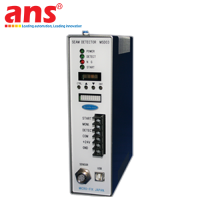
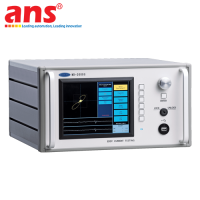
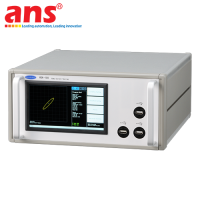
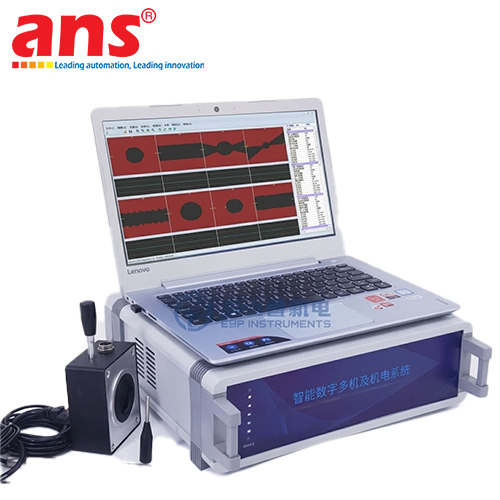
The Eddy Current Flaw Detector (Eddy Current Detector / Eddy Current Testing Machine), engineered, technically advanced, and manufactured by the internationally recognized brand TAIZHOU EBPU PRECISION INSTRUMENTS CO., LTD, stands as an elite non-destructive testing (NDT) workstation optimized for comprehensive flaw identification, structural safety mapping, and material characterization of conductive substrates. Within modern high-stakes industries such as aerospace engineering, nuclear power generation, petrochemical refining, and high-speed railway networks, the slightest presence of surface micro-fractures or near-surface material discontinuities can compromise total structural integrity and lead to catastrophic operational failure. The Eddy Current Testing (ET) methodology, driven by electromagnetic induction principles, provides a non-contact inspection solution. The advanced detector engineered by TAIZHOU EBPU registers real-time material deviations instantly without requiring direct component contact, couplants, or chemical color developers—surpassing the limitations of traditional NDT practices and perfectly preserving the native mechanical properties of the workpiece.
Operationally, the instrument applies a highly stabilized alternating current across an induction coil matrix housed within the specialized testing probe, establishing a dynamic primary alternating magnetic field. When the probe is brought into proximity with a conductive test object, this primary magnetic field induces circular, closed-loop eddy currents within the substrate layer. These induced eddy currents generate a secondary counter-magnetic field that dynamically opposes the probe's primary emission. If the substrate surface or near-surface layer contains material interruptions (such as localized fatigue cracks, casting porosity voids, or deep mechanical scores) or experiences microstructural deviations in electrical conductivity or magnetic permeability stemming from incorrect heat treatment profiles, the path of the eddy currents is disrupted and distorted. This transformation immediately alters the overall electrical impedance profile of the active probe coil assembly. TAIZHOU EBPU’s high-speed internal Digital Signal Processing (DSP) engine and ultra-high signal-to-noise ratio (SNR) signal acquisition architecture digitize this impedance deviation instantly, plotting the vector transformations smoothly onto a comprehensive Impedance Plane Display in real-time, enabling engineers to accurately quantify flaw dimensions, orientation, and depth metrics.
The technological core defining the superiority of the TAIZHOU EBPU Eddy Current Detector lies in its advanced multi-frequency and smart multi-channel structural framework. This capability permits the system to execute simultaneous multi-frequency scanning algorithms within a singular inspection loop. High-frequency parameters are automatically prioritized for scanning superficial skin-depth ranges to isolate tight hairline micro-cracks, while low-frequency profiles provide deep material penetration to track subsurface anomalies or validate hardening case depth profiles. Furthermore, the instrument incorporates sophisticated program algorithms for intelligent Noise Suppression and automated Lift-off Compensation. When navigating rough, unmachined surfaces or testing through thick defensive protective paint coatings, changing geometric clearances generate massive false liftoff signal trajectories; the detector automatically filters out these geometric topography fluctuations to deliver clean, unadulterated defect data. Additionally, in specialized heat exchanger tube mapping within oil and gas boiler systems, advanced Frequency Mixing modules completely suppress signal clutter originating from structural tube support plates, ensuring accurate identification of inner-diameter wall corrosion and erosion. Enclosed in a rugged, impact-resistant industrial chassis, featuring a sunlight-readable high-contrast display, and backed by comprehensive PC software integration for data logging and professional validation report generation, this workstation remains an indispensable asset for certified NDT engineers and global material inspectors.
• Manufacturer: TAIZHOU EBPU PRECISION INSTRUMENTS CO., LTD
• Product Line: High-Performance Digital Eddy Current Flaw Detector (Eddy Current Detector)
• Testing Methodology: Electromagnetic Induction Non-Destructive Method (Eddy Current Testing - ET)
• Global Regulatory Standards Compliance: Fully conforms to international NDT standards including EN 15548, ASTM E376, ASTM E566, and ASME SE-243
• Channel Architecture Configuration: Supports 1 to 4 independent testing channels (Scalable to multi-channel matrices for automated scanning arrays upon special request)
• Operational Frequency Spectrum (Frequency Range): Exceptionally wide span from 10 Hz up to 10 MHz (Upgradeable to 12 MHz for custom applications), with ultra-fine micro-step frequency tuning resolutions
• Signal Gain Matrix (Gain): Comprehensive adjustment spectrum from 0 dB to 100 dB with a fine 0.1 dB step size, supporting independent X-axis and Y-axis gain amplification modules
• Phase Vector Regulation (Phase Rotation): Continuous linear adjustments from 0° to 360° featuring a tight 0.1° indexing step to isolate true flaw responses from background noise signals
• Digital Filtering Hardware (Filters): Integrated adjustable Low-pass filters (1Hz to 10kHz) and High-pass filters configured to maximize system signal-to-noise ratio (SNR)
• Visual Interface Display Mode: High-contrast TFT color display screen, dimensions ≥ 5.7 inches, anti-glare execution for sunlight readability, simultaneously plotting Impedance Planes, sweep charts (V-T/Y-T Scan), and definitive alphanumeric readouts
• Intelligent Alarm Monitoring (Alarm): Supports programmable rectangular (Box), circular (Circle), and sector sector alarm zones on the active impedance plane; triggers internal sound buzzers and external high-visibility red LEDs upon signal threshold breach
• Compatible Probe Matrix: Broad compatibility supporting absolute, differential, reflection, high-speed rotary rivet-hole probes, and encircling coil arrays
• Material Conductivity Evaluation (Conductivity Measurement - Optional upgrade): Integrated digital material conductivity tracking scaled in %IACS or MS/m for rapid non-ferrous alloy sorting (e.g., aluminum and copper grade verification)
• Internal Storage Management: Large-capacity internal memory architecture capable of archiving thousands of complete impedance waveforms, system configuration parameters, and flaw layout screenshots
• Communication Link Interfacing: High-speed USB and LAN (RJ45) network connectivity for seamless data transfer to computer stations running proprietary NDT analysis software for database archiving and automated engineering report export
• Enclosure Protection Framework: Industrial IP65 ingress protection classification against dust and moisture penetration, reinforced with shock-absorbing structural rubber bumpers for harsh environment deployment
• Power Infrastructure: High-capacity rechargeable Lithium battery core providing a sustained continuous operational window ≥ 8-10 hours, integrated with smart fast-charging circuits